
Produce trucking from the Salinas Valley: seasons, reefers, and booking ahead
Leafy greens leave Salinas for Yuma every November and come back in spring. How that seasonal shift moves reefer capacity, and how produce shippers plan around it.

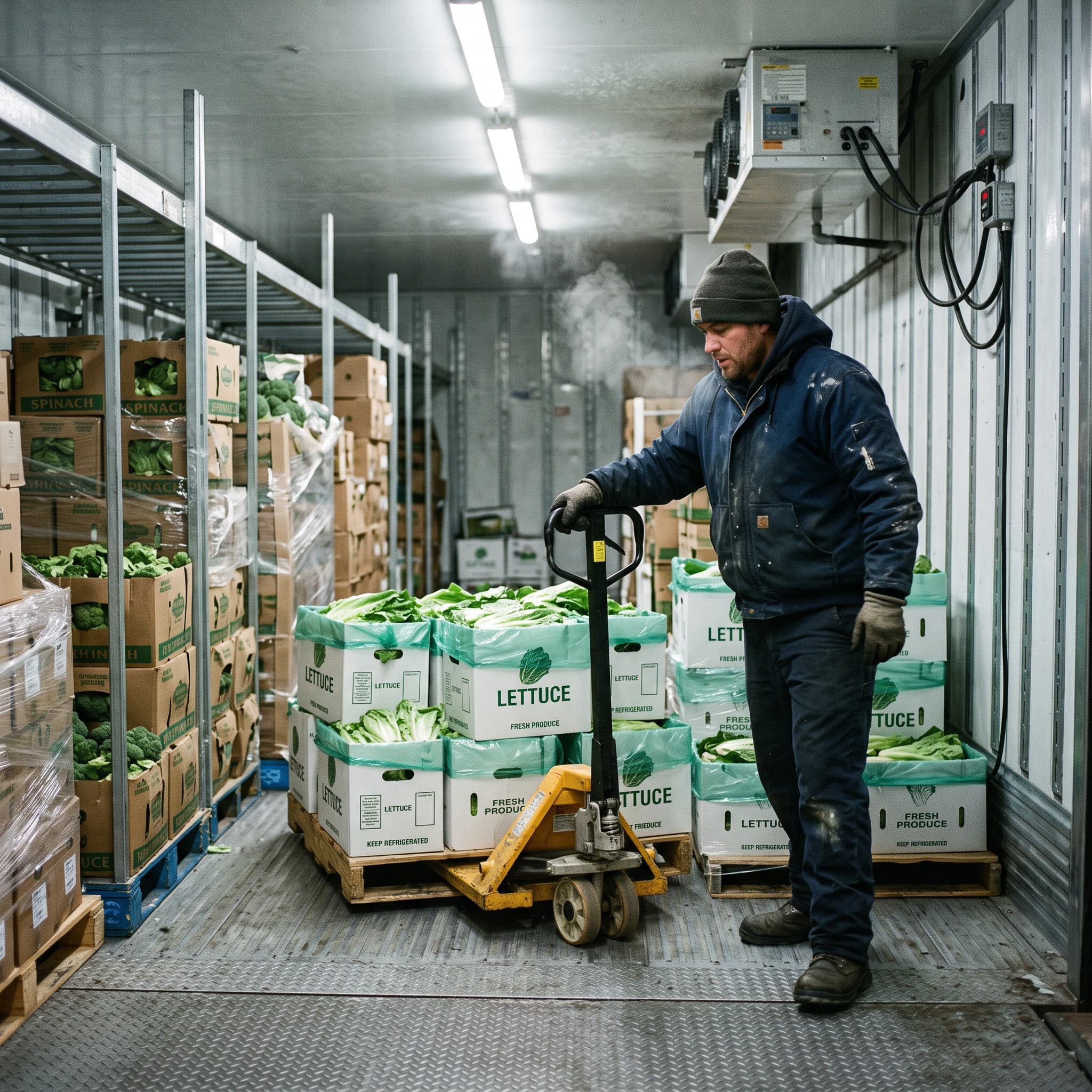
Produce trucking out of the Salinas Valley follows the lettuce. From spring through fall, the Salinas-Watsonville area ships much of the country's iceberg and romaine. From November to April the harvest moves to the Yuma area of Western Arizona. Book reefers ahead of both shifts, and send the set temperature in writing.
Below is how the calendar works, what it does to reefer capacity, what to send for a quote, and why loads get turned away at the dock. Our Bay Area reefer trucking desk runs pickups from Salinas and Central Valley sheds, with pulp temperatures checked at loading.
When is Salinas produce season?
Leafy greens rotate between two regions. The Salinas-Watsonville area grows them in the summer months, and Western Arizona, around Yuma, grows them in winter. A University of Arizona Cooperative Extension analysis of USDA shipment data (September 2023) shows iceberg lettuce harvested in Western Arizona between November and April. In most of those weeks the region accounts for 70% to 90% of national shipments. Romaine follows the same cycle, with Western Arizona at roughly 80% of national supply at its winter peak.
- 70–90%
- ICEBERG SHIPMENTS FROM W. ARIZONA, NOV–APR
- ~80%
- ROMAINE SUPPLY AT THE WINTER PEAK
- 26
- PALLETS IN OUR 53' REEFER
The move does not happen on one day. The same report notes that California's Central Valley produces lettuce during the shifts between the two regions, and that processed lettuce lines are cleaned, taken apart and trucked from one area to the other in a matter of days. For a shipper, that means a stretch in late fall and again in spring when volume is split across three regions.
Lettuce is not the only crop that moves. Celery, broccoli, cauliflower and cabbage also have Western Arizona seasons that start in November and run to April or May, according to the same analysis.
How does the season shift affect reefer trucks?
Reefer capacity follows the freight. When the harvest leaves Salinas, many of the trucks that ran out of the valley reposition toward Yuma with it. A shipper still moving product out of Northern California through the transition, from a cooler, a late crop or a Central Valley shed, competes for fewer reefers nearby. In spring the flow reverses.
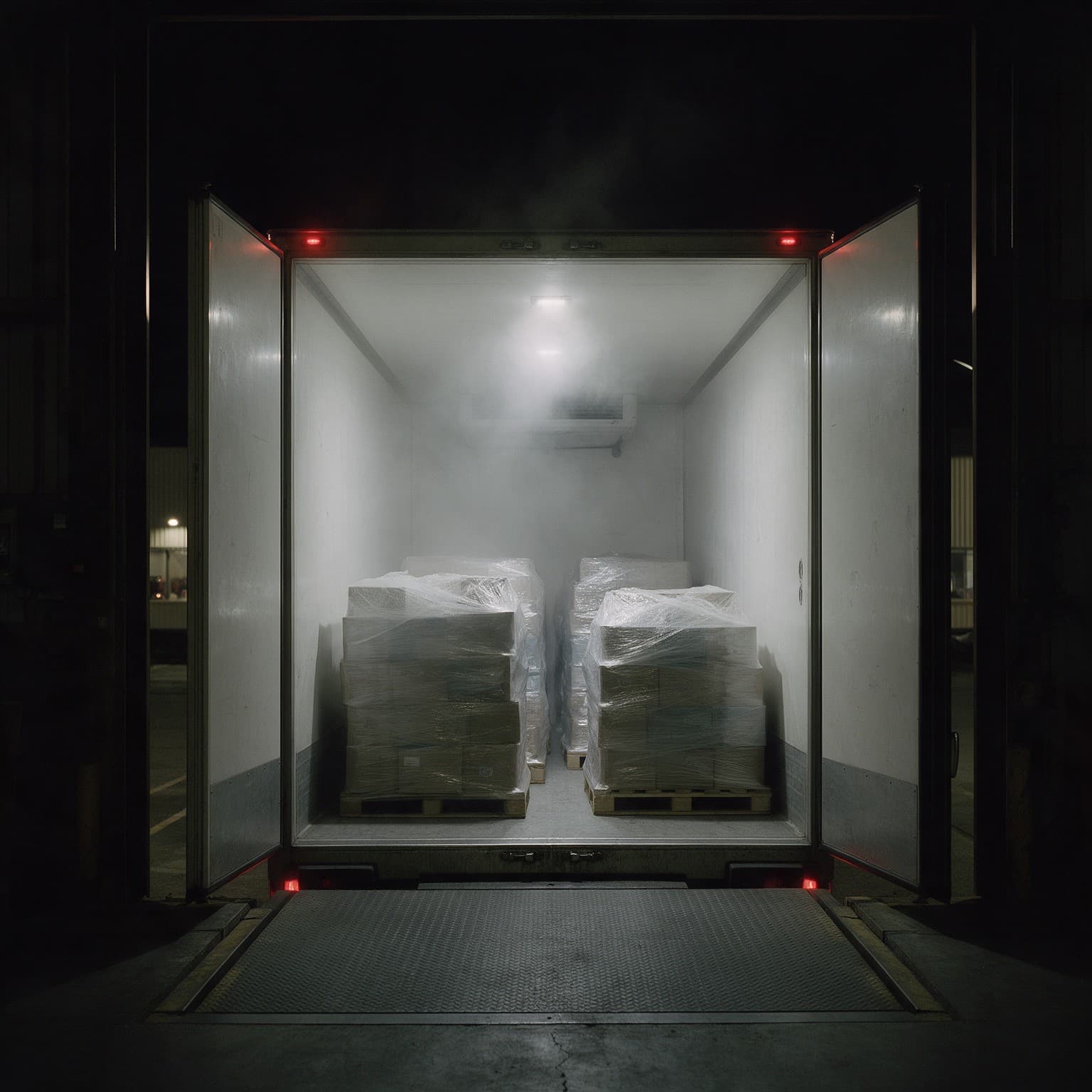
Other demand lands on the same trucks. Holiday food shipments in November and December use the same reefer fleet, so produce shippers are not the only ones looking for capacity during the fall shift.
Three habits help. Book as soon as harvest dates are known, give a date range when the crop can move, and keep a steady weekly pattern so dispatch can plan trucks into the valley. Plan transit too: with a solo driver, Salinas to Los Angeles takes about 1 day, Salinas to Denver 2 to 3 days and Salinas to Chicago about 4. For short-shelf-life freight going coast to coast, a team reefer keeps the load moving without a 10-hour stop.
What does a produce shipper need to book a reefer?
Federal food safety rules put part of this on the shipper. Under the FDA's sanitary transportation rule, a covered shipper of food that needs temperature control has to give the carrier the operating temperature in writing, including the pre-cooling phase when one is needed. One notice is enough until the conditions of shipment change.
BEFORE YOU BOOK A PRODUCE LOAD
- Commodity and the set temperature the receiver requires, in writing
- Whether the unit runs continuous or cycle
- Pickup at the field, cooler or packing shed, with address and hours
- Pallet count, weight and whether the load is mixed
- Delivery appointment and the receiver's inspection rules
- Pickup date, and the date range if the harvest timing can move
With that, dispatch matches the unit and the driver to the load and replies with a rate. Grocery and DC appointments are booked and confirmed by us.
Why do produce loads get rejected at delivery?
Most rejections come down to temperature or condition. The reefer has to be pre-cooled to the set point before loading, and the set temperature on the bill of lading must match what the shipper ordered. The FDA rule lists the same steps: the carrier pre-cools the trailer as the shipper specified, the loader checks that it was pre-cooled, and the receiver checks the food temperature, the trailer's setting and the smell of the load on arrival.
The trip record settles most disputes. Under the rule, a carrier that has agreed to handle temperature control must show, when asked, that it held the temperature the shipper specified, for example with readings at loading and unloading or time and temperature data from the trip. Our units log temperature continuously, and the log comes with the signed POD when you ask for it at booking.
Pulp temperature is the other half. A reefer is built to hold a temperature, not to remove field heat from warm product, so produce that is loaded warm tends to arrive warm. Our drivers check pulp temperature at pickup and note it on the BOL, so the record shows the product's condition when it left the shed.
If a receiver still turns the load away, dispatch calls you from the dock and works out a recovery plan with you before the truck leaves.
“THE TRUCK THAT SHOWS UP PRE-COOLED AND ON TIME IS THE ONE YOU BOOKED BEFORE THE HARVEST MOVED.”
Can different produce share one reefer?
Sometimes. Items can ride together when they need the same set point and are compatible. Some fruit gives off ethylene, a gas that speeds ripening and can damage leafy greens loaded near it, so ask before you mix a load. When a load needs two temperatures, a multi-temp reefer splits frozen and chilled zones with a bulkhead.
Imported produce through Oakland has its own clock: at TraPac, reefer containers get 2 free days against 4 for general cargo. Our Port of Oakland drayage playbook covers that math. For dry, flatbed or expedited freight on the same lanes, see all our freight services.
Produce trucking FAQ
What is a reefer?
A trailer with its own refrigeration unit that holds a set temperature for the whole trip. Ours run from −20°F frozen to 70°F controlled ambient.
When is Yuma lettuce season?
Western Arizona harvests iceberg lettuce between November and April and ships 70% to 90% of national volume in most of those weeks, per University of Arizona Cooperative Extension analysis of USDA data. Salinas-Watsonville covers the summer months.
When should I book?
As early as your harvest dates are known, and earlier around the November and spring transitions.
Do you move produce out of Salinas and Watsonville?
Yes. We pick up at Salinas and Central Valley sheds, with pulp temperature checked at loading. Send your pickup ZIP and dates and we will confirm the lane.