
How to determine freight class after the 2025 NMFC changes
Since July 19, 2025, most LTL freight is classed by density. The 13 density brackets, the formula, and a worked example you can run on your own pallet.

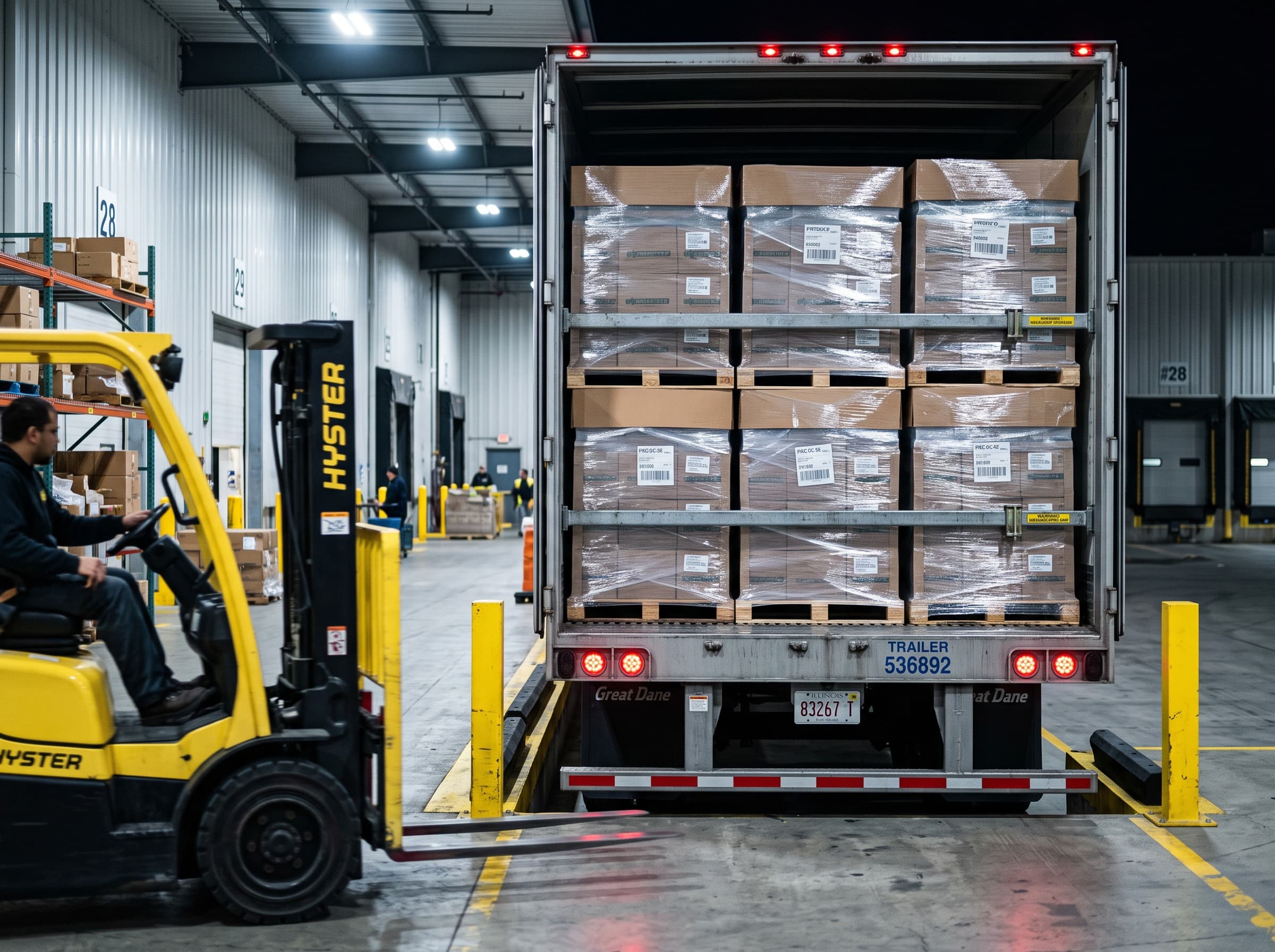
Since July 19, 2025, most LTL freight gets its class from density: weight divided by cubic feet, including the pallet. Measure the shipment, divide length times width times height in inches by 1,728, divide the weight by that number, then read the class off the 13-step NMFC scale below.
Freight class is a number LTL carriers use to price a shipment. Dense, easy freight sits in a low class and costs less to move. Light, bulky freight sits in a high class and costs more. It only matters for LTL shipping, where your pallets share a trailer and each shipper pays for the space and handling they use.
What changed in the NMFC in 2025?
The National Motor Freight Classification is published by the NMFTA and updated through dockets. Docket 2025-1 took effect on July 19, 2025 and moved most commodity listings from commodity-based classes to density-based classes. As LTL carrier Old Dominion explains in its guide to the NMFC changes, the old 11-step density scale was replaced with a 13-step scale and two new classes, 50 and 55, were added for very dense freight.
- JUL 19
- DOCKET 2025-1 IN EFFECT, 2025
- 13
- DENSITY BRACKETS, WAS 11
- 50, 55
- NEW CLASSES
The same docket combined about 2,000 commodity listings into fewer, broader items, so the item number you used last year may have been cancelled or merged. Docket 2025-2 followed in fall 2025 with more cancellations, and Docket 2026-1 was scheduled for February 6, 2026. If your bill of lading templates still carry old item numbers, check them against the current NMFC.
How do you calculate freight density?
Measure the shipment as it will ship, on the pallet, in inches: length, width and height at the longest points, including any overhang. Multiply the three and divide by 1,728 to get cubic feet. Then divide the total weight, including the pallet and packaging, by the cubic feet. The result is density in pounds per cubic foot.
Worked example: a pallet measures 48 by 40 by 50 inches and weighs 600 pounds. 48 times 40 times 50 is 96,000 cubic inches. Divided by 1,728 that is about 55.6 cubic feet. 600 divided by 55.6 is about 10.8 pounds per cubic foot, which falls in the 10 to under 12 bracket: class 92.5.
For a shipment with several pallets of different sizes, add up the cubic feet of every pallet and the weight of every pallet, then divide total weight by total cubic feet. Our freight class calculator does this for you and takes more than one pallet size.
What is the freight class for each density?
NMFC DENSITY SCALE (POUNDS PER CUBIC FOOT)
- Less than 1: class 400
- 1 to less than 2: class 300
- 2 to less than 4: class 250
- 4 to less than 6: class 175
- 6 to less than 8: class 125
- 8 to less than 10: class 100
- 10 to less than 12: class 92.5
- 12 to less than 15: class 85
- 15 to less than 22.5: class 70
- 22.5 to less than 30: class 65
- 30 to less than 35: class 60
- 35 to less than 50: class 55
- 50 or greater: class 50
Watch the edges of each bracket. At 9.9 pounds per cubic foot a shipment is class 100, and at 10.0 it drops to class 92.5. An inch of overhang or a taller pallet can push density below a break, so measure carefully before you round.
Does every item use the density scale now?
No. Class is still set by four characteristics: density, handling, stowability and liability. For most items density now decides it, but some commodities keep a specific class because they are fragile, hard to stack or carry extra liability. Classes such as 77.5, 110, 150, 200 and 500 are set by the item listing, not by the density scale. Hazmat can also change the class.
The 2025 changes also add special handling identifiers to item listings, so freight that needs care at the dock is flagged up front. Look up your item's NMFC listing before you rely on the density chart. Our NMFC codes page lists common Bay Area commodities as a starting point, and the official source is the NMFC itself.
How do you avoid a freight class reclassification?
A reclass is an extra charge when the carrier finds a different class or weight than your bill of lading shows. Old Dominion warns that shipments that do not match the new NMFC items and subprovisions can lead to rate adjustments and clerical fees. The fix is accurate numbers before pickup, not an argument after the invoice.
BEFORE YOU BOOK LTL
- Measure every handling unit on the pallet, to the inch, at its widest points
- Weigh with the pallet and packaging included
- Check the NMFC listing for your item, not only the density chart
- Put the class and NMFC item number on the bill of lading
- Keep pallets square: overhang counts in the measurement
We check the class against the NMFC before booking, so there is no reclass on the invoice. Send the product, the dimensions and the weight with your quote request and dispatch confirms the item number and class.
When does freight class stop mattering?
Freight class is an LTL pricing tool. Once a shipment is big enough to book a whole truck, the rate is set by the lane and the equipment, and class drops out. That point often comes around 10 to 12 pallets. Our guide on FTL vs LTL shows how to tell when you are there. For flatbed, reefer and other modes, see all our freight services.
Freight class FAQ
What is the cheapest freight class?
Class 50, for freight of 50 pounds per cubic foot or more. It was added to the NMFC scale on July 19, 2025.
Does freight class apply to full truckloads?
No. Freight class is an LTL pricing tool. Truckload rates are priced by lane and equipment.
What happens if my class is wrong?
The carrier can reclass the shipment after inspection and bill the difference, often with a fee.
Can I use a freight class calculator?
Yes. Our freight class calculator runs the same density formula shown above. Check your item's NMFC listing too, since some items have a set class.