
Liftgate and job site delivery: a checklist for construction and solar freight
No dock, soft ground, a narrow gate and a crew waiting. What to tell the carrier before a job site delivery so the truck can actually unload.
 BYLAX FREIGHT
A 53 ft trailer fits 26 standard pallets loaded straight and up to 30 turned. Here is how to tell when your shipment should stop paying LTL and book the whole truck.

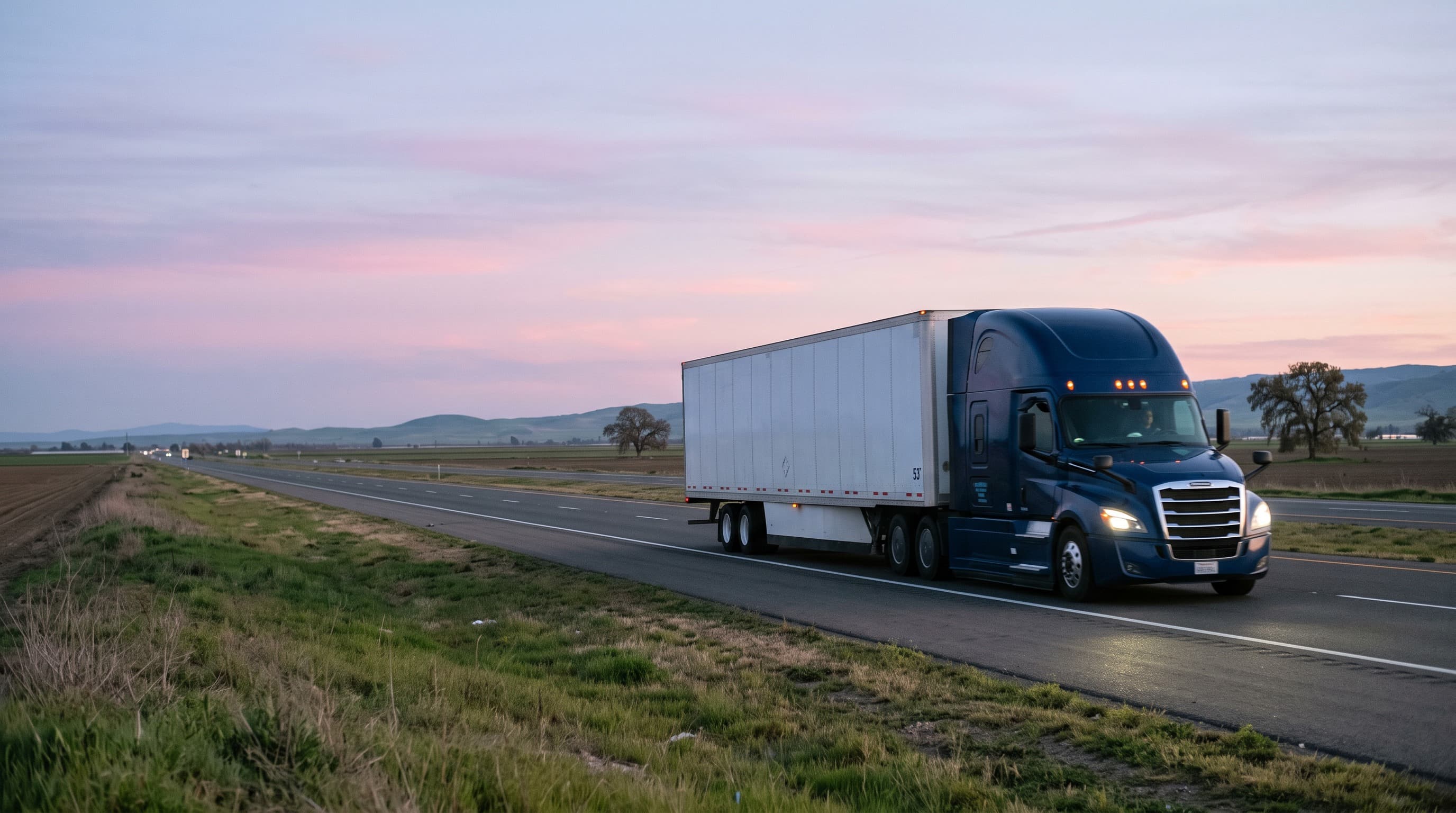
A 53-foot dry van holds 26 standard pallets loaded straight and up to 30 turned. LTL usually fits one to ten pallets. Somewhere around 10 to 12 pallets, a full truckload often starts to cost less per pallet than LTL, so if your shipment is in that range, price both.
FTL, full truckload, means you book the whole trailer and it goes straight from your dock to the consignee. LTL, less than truckload, means your pallets share a trailer with other shippers' freight and move through carrier terminals on the way. We quote Bay Area full truckload and LTL shipping from the same desk, which is how we see where the two prices cross on real lanes.
A 53-foot dry van holds 26 standard 48 by 40 inch pallets loaded straight, two across and 13 deep, single stacked. Turned sideways, the same trailer can take up to 30. If your freight is stackable and the weight allows it, double stacking can raise those numbers, but weight usually runs out first.
The math is simple: a 53-foot trailer is 636 inches long. A pallet loaded with its 48 inch side along the trailer takes 13 rows of two. Turned so the 40 inch side runs along the trailer, it takes 15 rows of two, as long as two 48 inch sides fit side by side across the floor.
That last condition is where turned loads fail. Federal rules cap trailer width on the National Network at 102 inches on the outside, under the federal truck width limit. The walls take part of that, so two turned pallets need 96 inches of clear floor, and some trailers or overhanging loads do not leave it. Plan on 26 and treat 30 as a bonus your dispatcher confirms.
Floor space is only half the question. On the Interstate system, the federal limit is 80,000 pounds gross vehicle weight, and that figure includes the tractor and the empty trailer as well as your freight. Axle limits apply too: 20,000 pounds on a single axle and 34,000 on a tandem, under the same set of federal weight rules.
What is left for cargo on our 53-foot van is up to 45,000 pounds. Here is an example of how that caps a load: 26 pallets at 1,800 pounds each come to 46,800 pounds, so the truck is full by weight at 25 pallets even though the floor has room for more. Send the total weight with your pallet count, not just the pallet count.
LTL pricing is built on freight class, weight and distance, plus accessorial charges for things like liftgates, inside delivery and residential stops. A truckload rate is one price for the whole trailer on that lane. As the pallet count rises, the LTL bill keeps growing while the truckload rate stays put, and at some point the lines cross.
On our lanes that point is often around 10 to 12 pallets, but it moves with the lane, the season and the class of the freight. Dense, low-class freight stays cheap in LTL for longer. Light, bulky, high-class freight gets expensive faster, so a truckload can win earlier. If you are not sure of your class, see our guide on how to determine freight class.
Class also creates a cost that never shows on the quote: the reclass. If the LTL carrier finds a different class or weight than your bill of lading shows, it adds a charge after delivery. We check the class against the NMFC before booking to avoid that. A truckload is priced on the lane and the equipment, so class does not move the rate.
Usually, yes. An LTL shipment goes to a terminal, is sorted onto a linehaul trailer and may be transferred again before final delivery. A full truck goes from your dock to the consignee with one load and one unload.
Our published example lanes show the gap. Oakland to Los Angeles takes 2 days by standard LTL and 1 day by full truckload. Oakland to Chicago takes 5 to 6 days by LTL and 4 by truck. San Leandro to Newark takes 6 to 7 days by LTL and 5 by truck. LTL times are terminal to terminal and truckload times door to door, so the real gap can be wider.
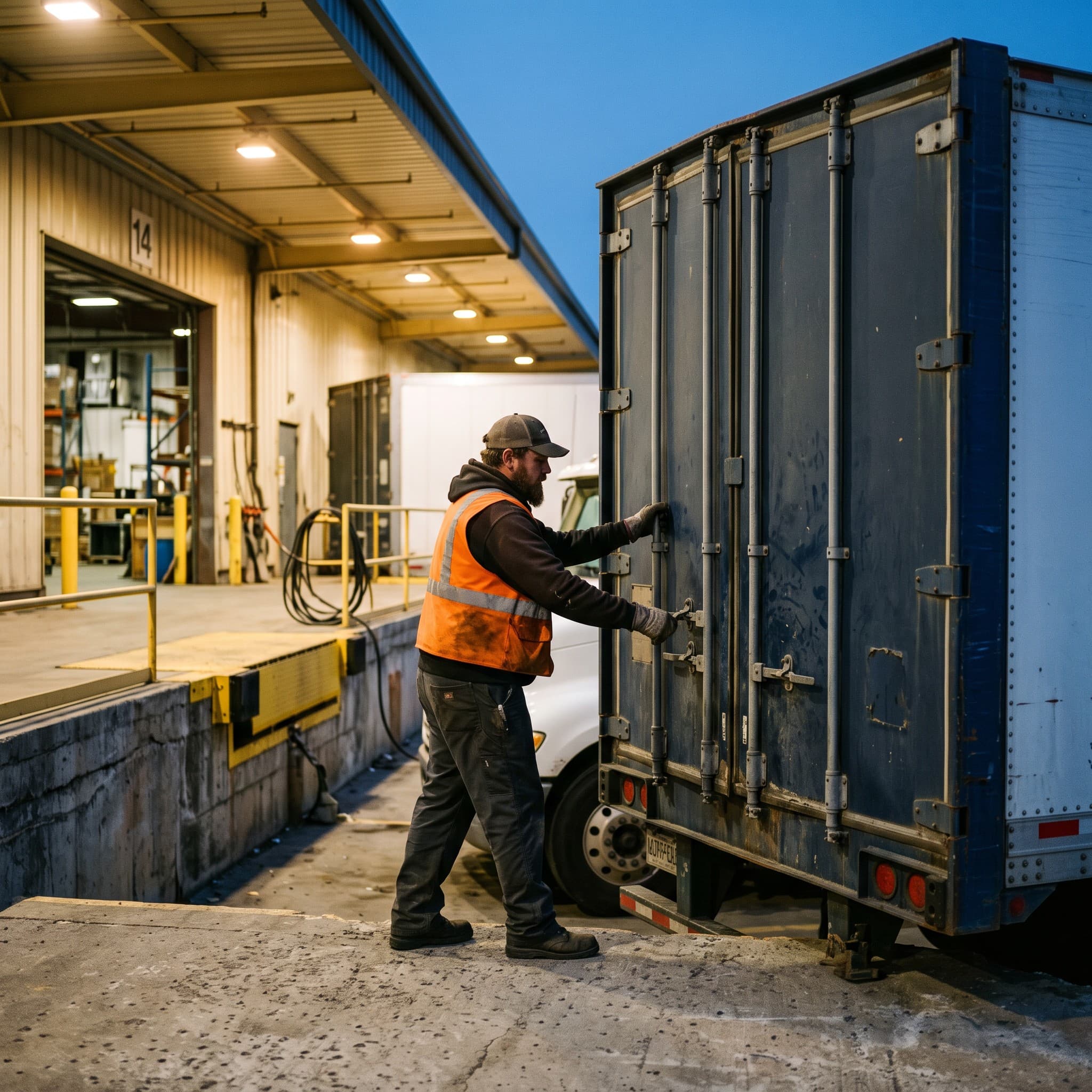
Partial truckload sits between the two. Your freight shares a truck with one or a few other loads but skips the terminal network, so it is handled less than LTL. We quote 6 to 10 pallets as a partial truckload, which we call Volume LTL, whenever that comes out cheaper than standard LTL. It fits freight too big for a clean LTL rate that still does not fill a trailer.
Book a full truck earlier than the pallet count suggests when the freight is fragile, high value or on a deadline, because no terminal transfer means fewer touches and less damage. If you ship full loads on a schedule, a drop trailer lets you load at your own pace and we swap it when it is full.
For a truckload, booking one to three days ahead covers most lanes out of the Bay Area, with more lead time in produce season and the holiday peak. For anything that needs a liftgate, a flatbed or a team, see all our freight services.
FTL VS LTL: QUICK CHECK
A 53-foot trailer holds 26 standard pallets loaded straight and up to 30 turned, single stacked. A 48-foot trailer holds 24.
Usually, yes. LTL freight moves through terminals and may be transferred between trucks. FTL goes direct from pickup to delivery.
Freight class drives LTL pricing. Truckload rates are priced on the lane, the equipment and the market, so class does not change them.
Pickup and delivery ZIP codes, pallet count and size, total weight, whether the pallets stack, and any special delivery needs. If you are near 10 pallets, we price LTL and truckload side by side.