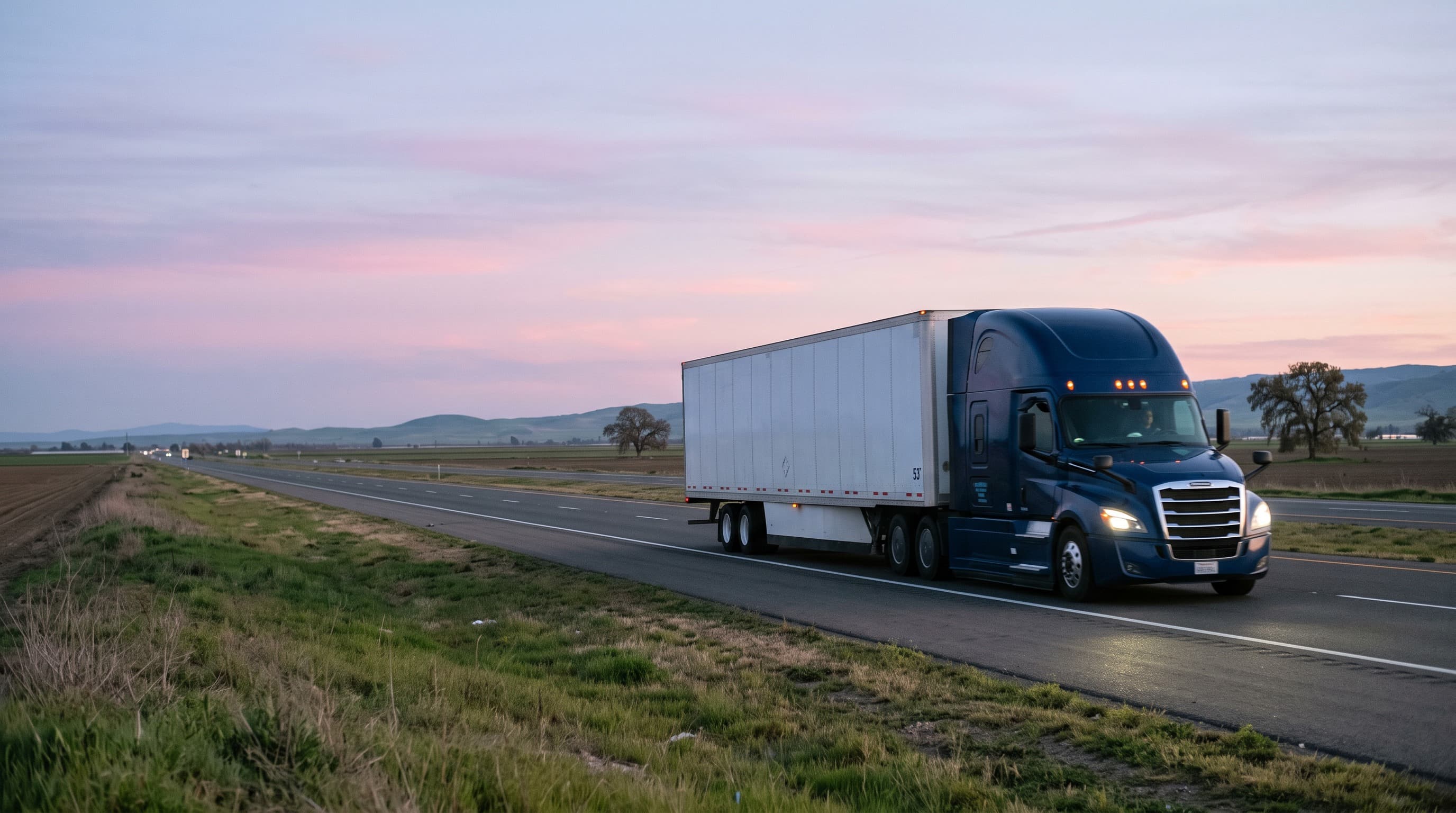
FTL vs LTL: how many pallets before a full truck makes sense
A 53 ft trailer fits 26 standard pallets loaded straight and up to 30 turned. Here is how to tell when your shipment should stop paying LTL and book the whole truck.
 BYLAX FREIGHT
No dock, soft ground, a narrow gate and a crew waiting. What to tell the carrier before a job site delivery so the truck can actually unload.

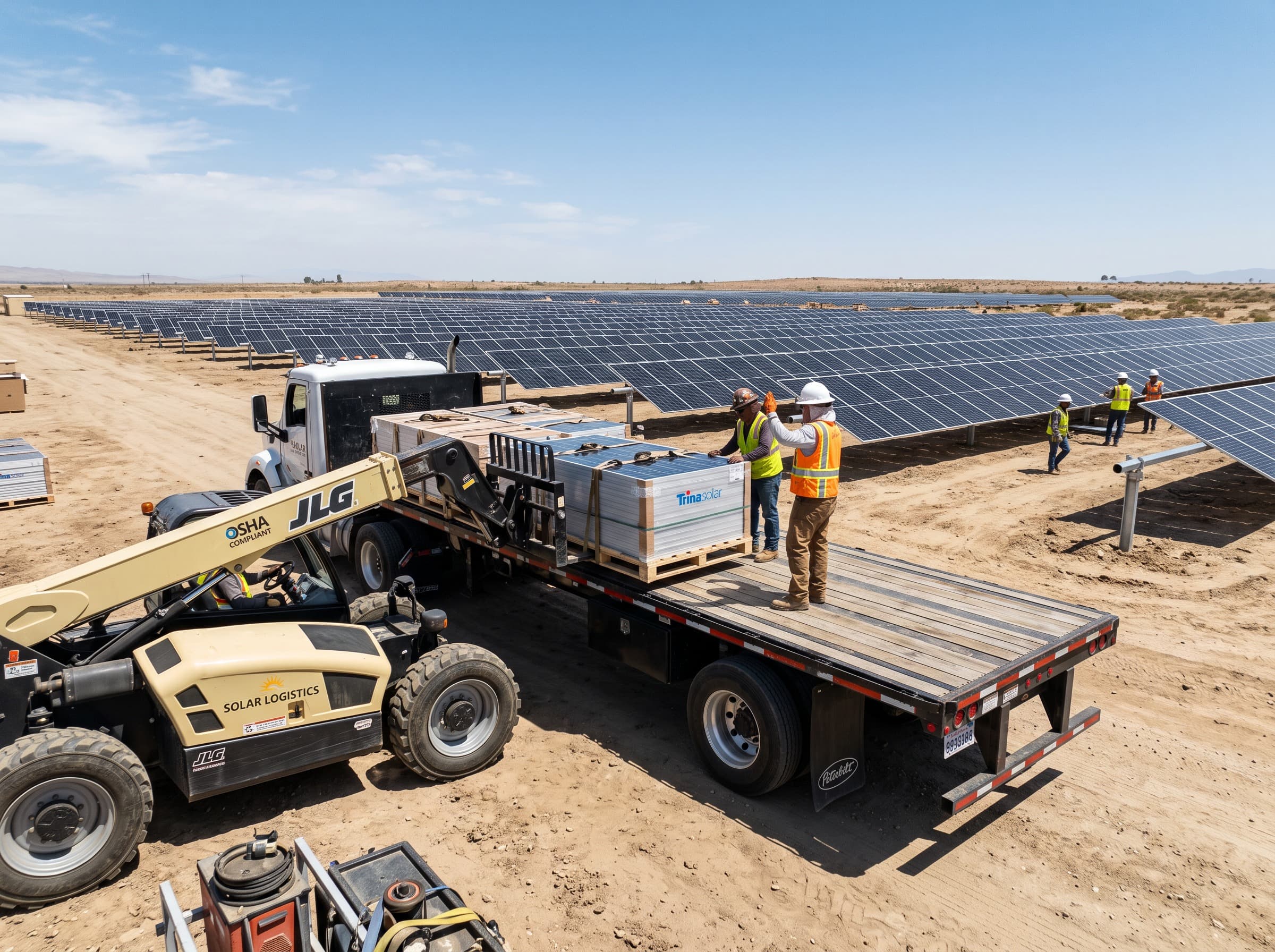
A job site delivery works when two things are settled before the truck leaves: how it reaches the drop point, and how the freight comes off with no dock. Book the liftgate, forklift or crane with the load, send a pin and a site contact, and match the trailer to the ground and the gate.
Job sites, solar farms and residential builds rarely have a dock. Most failed deliveries trace back to an unloading plan nobody confirmed or a trailer that could not get in. Our flatbed and step deck desk confirms both before dispatch, and pallet loads to a site without a dock move on LTL with a liftgate booked up front.
A liftgate is a powered platform at the back of a truck that lowers freight from the trailer floor to the ground. You need one when the delivery address has no dock and nothing on site that can lift the pallet off. The driver lowers the pallet to the ground at the tail of the truck. Taking it further inside a building is inside delivery, a separate service on the quote.
Book the liftgate with the shipment, not when the driver is on site. On our LTL quotes, liftgate, inside delivery, residential delivery and delivery appointments are priced before pickup. Homes and job sites go out with residential or limited-access delivery on the quote, so the invoice matches what was agreed.
A liftgate has a weight limit and needs flat, firm ground under it. Heavy machines, long bundles of lumber or steel and full pallets of solar modules can be too heavy or too long for one. Those need a forklift on site, a crane, or a different trailer.
Start from how the freight comes off, then pick the trailer. Equipment that can only be unloaded from the rear needs a liftgate or a dock. Equipment that is open on the sides and top can be unloaded by forklift or crane wherever there is room to work.
MATCH THE TRUCK TO THE SITE
Width and height decide whether a permit enters the picture. A load wider than 8.5 ft, or one that puts the truck over the state height limit (14 ft in California, about 13.5 ft in many states), is oversize, and the permit adds cost and time to the move. Our guide to oversize load permits by state covers what that looks like.
Someone on the receiving side, with the right machine, unless the truck brings its own liftgate. The driver delivers the load. The site usually supplies the forklift or crane and the person who runs it. Agree on that before dispatch, because a truck that arrives to no operator waits or leaves.
The operator matters as much as the machine. On construction sites, federal OSHA rules say forklift operators must be trained and evaluated before they operate one, and a forklift's rated capacity has to be posted on it and not exceeded (29 CFR 1926.602). A pallet heavier than the site forklift's rated capacity cannot be unloaded with it, so send weights early.
For crane offloads, timing is the cost. Our dispatch sets arrival to the hour your forklift or crane is on site, so the crew is not paying for idle time and the truck is not waiting for the crane.
Solar modules ship on pallets, often by the truckload, and they are fragile when dropped or handled flat. Tell the carrier the pallet count, dimensions and weight, and what will lift them off. If the drop point is in an open field, it has to be on ground the truck can reach in any weather.
Large installs ship in waves, not all at once. On one Kern County project, our power and energy team moved 38 flatbeds of modules in 9 days, with each wave timed to the install crew's daily count. Where there is no paved road, a step deck or RGN handles the access. We confirm the ETA with the site lead the day before and again on the morning of delivery.
Battery storage is different freight. Lithium battery systems ship as Class 9 hazardous materials, moved by hazmat-endorsed drivers with placards, so tell us at booking.
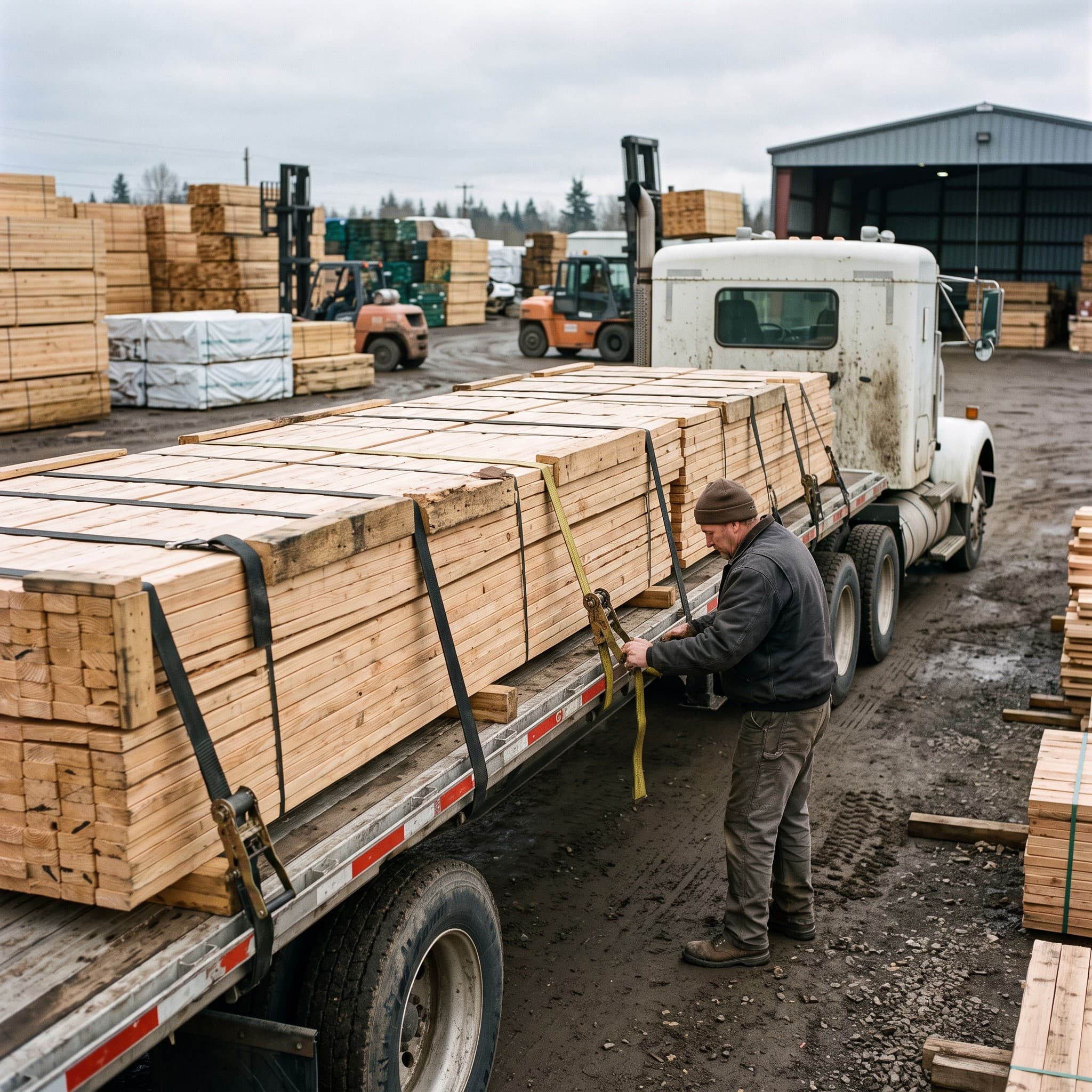
A street address gets the truck to the area, not to the drop point. These six details are what our dispatch asks for before a site load is booked.
BEFORE THE TRUCK IS DISPATCHED
“THE ADDRESS GETS THE TRUCK TO THE SITE. THE SITE CONTACT GETS THE FREIGHT OFF IT.”
On flatbed loads we photograph the secured freight before the truck leaves and send a signed POD the same day. The trailer reports its GPS position every 15 minutes, so the site lead knows when to have the crew ready. For other freight types, see all our freight services.
If there is no dock and no forklift at the delivery address, yes, as long as the freight fits the liftgate's weight and size limits. Book it with the shipment so it is on the quote.
Tell the carrier as soon as you know. A truck that arrives to a closed gate may mean a redelivery or a waiting charge.
Yes, when the access, the site contact and the unloading plan are confirmed before dispatch. We confirm who unloads and with what, and send a step deck or a truck with the right access.
Pickup and job site ZIP codes, what is shipping, weights and dimensions, and how it will be unloaded.